
 English
 Español

How FSI Helps Companies Navigate Customs, Compliance & Cross-Border Logistics
How FSI Helps Companies Navigate Customs, Compliance & Cross-Border Logistics
International shipping creates opportunities for businesses to reach new markets, diversify suppliers and build more resilient supply chains. But every border a shipment crosses also introduces another layer of complexity. Customs declarations, product classifications, import and export requirements, tariffs, permits and country-specific regulations can all affect whether freight moves smoothly or sits waiting for clearance.
For businesses, the real challenge is not simply understanding the rules. It is managing those requirements without allowing them to disrupt production schedules, increase costs or consume the time of employees who should be focused on running the business.
At Freight Services Inc. (FSI), we believe customs and trade compliance should be treated as part of the logistics strategy from the beginning, not as paperwork to address after freight is already in transit.
The Cost of Getting Customs Wrong
A documentation problem can look small on a spreadsheet. At the border, it can become a much larger operational issue. Incorrect or incomplete documentation, classification questions, missing permits or unexpected regulatory requirements can lead to delayed clearance, storage and demurrage costs, missed delivery windows and disruptions farther down the supply chain.
For manufacturers in particular, one delayed shipment may affect much more than the freight itself. The shipment could contain equipment needed to keep a production line running, components required to complete an order or materials promised to a customer. That makes customs compliance an operational issue, not simply an administrative one.
FSI supports international customers by coordinating customs documentation, import and export requirements, transportation planning, and communication with licensed customs brokers and other trade partners. Our role is to help identify potential complications early and bring together the people, information and transportation required to keep freight moving.
When a Shipment Is Already Stuck, Experience Matters
Sometimes FSI becomes involved before a shipment moves. Other times, a company calls because something has already gone wrong. One international manufacturer of mining equipment came to FSI after a shipment had been held in customs for more than nine months due to unresolved documentation and regulatory requirements associated with the equipment. The outstanding issues involved tariff classification, confirmation of the equipment’s country of origin and an additional customs inspection.
Rather than focusing only on transportation, FSI helped coordinate the information, documentation, permits and appropriate customs and regulatory partners needed to address those issues. Within approximately one month of FSI becoming involved, the shipment cleared customs and reached the end customer.
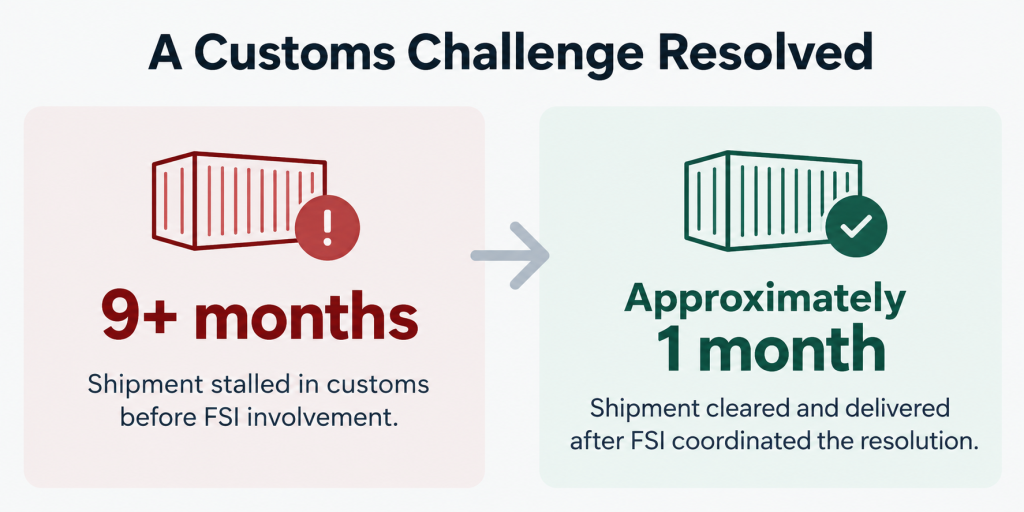
This example illustrates an important point about international logistics: moving freight is only part of the job. When something goes wrong at customs, companies need a partner that can identify what is preventing clearance, coordinate with the appropriate licensed professionals and help move the resolution process forward. The goal is not simply to react faster. It is to build processes that reduce the likelihood of those problems occurring in the first place.
Compliance Starts Before the Shipment Does
Many customs problems can be traced back to decisions made before cargo ever reaches a port or border. Questions about classification, valuation, country of origin, documentation and regulatory requirements should be addressed as part of shipment planning. Even seemingly minor discrepancies can result in additional scrutiny, unnecessary duties or clearance delays.
FSI helps customers coordinate those requirements with licensed customs brokers and other trade professionals alongside transportation decisions. That means asking questions such as:
- Are the appropriate documents in place before pickup?
- Have the responsible customs professionals reviewed product classifications and valuations?
- Are there permits or regulatory requirements associated with this commodity?
- Could changing regulations or tariffs affect this shipment?
- Are the shipper, carrier, customs broker and receiving team working from the same information?
Solving those questions before freight moves is almost always preferable to solving them while a container is waiting at a port.
Cross-Border Expertise Comes From Operating on Both Sides of the Border
This becomes especially important for companies doing business between the United States and Mexico. FSI does not approach Mexico logistics solely from a U.S. office. We have built operations in Mexico ourselves, giving our teams firsthand experience with the practical realities of working across the border.
When FSI expanded operations into Hermosillo, Mexico, our own team encountered differences in business practices, tax requirements, currency management, invoicing and regulatory compliance. We responded by coordinating our U.S. and Mexico teams, incorporating local expertise and bilingual support, and developing processes that accommodated requirements on both sides of the border.
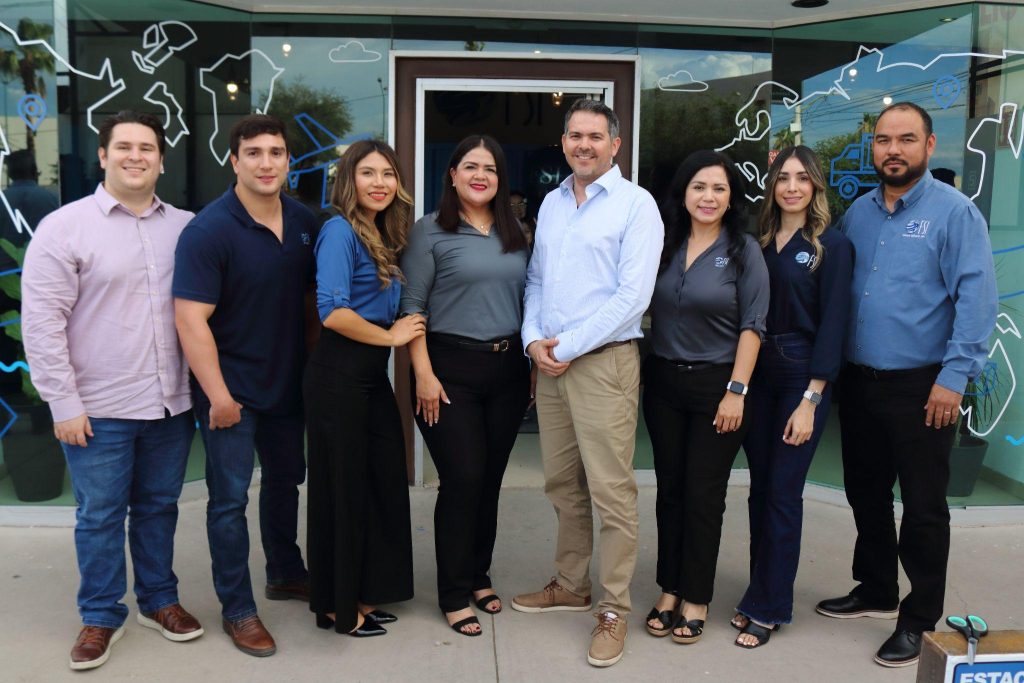
That experience matters when helping our customers navigate their own cross-border operations. The challenges are not always confined to a customs form. They can involve communication between teams, documentation standards, local business practices, payment requirements and coordination among multiple parties.
Having people who understand how business actually operates on both sides of the border helps FSI coordinate transportation and customs-related requirements more effectively. It also means our customers are working with a logistics partner that understands these challenges through direct operational experience.
Compliance Is Also About Visibility
Resolving a customs delay is one challenge. Building a more reliable international supply chain is another. Our work with the mining-equipment manufacturer ultimately expanded beyond resolving the customs issue. As we evaluated the company’s broader international logistics needs, another problem became clear: limited visibility into global shipments.
As its international business grew, the manufacturer often had only rough estimates of where shipments were and when customers could expect delivery. Without reliable information, it was difficult to anticipate delays, manage exceptions or make informed transportation decisions.
FSI introduced enhanced data analytics and real-time tracking while helping the company evaluate its transportation strategy. That broader review also revealed opportunities to shift appropriate shipments from expensive last-minute air freight to ocean freight, allowing the company to make more deliberate decisions about transportation costs and delivery requirements. What began as a customs problem became an opportunity to improve the manufacturer’s overall logistics operation.
Better visibility does more than answer the question, “Where is my shipment?” It allows logistics teams to identify exceptions sooner, communicate more accurately with customers and make better decisions when conditions change.
And when that visibility is combined with proactive planning and coordination among customs professionals, carriers and international partners, businesses are better positioned to manage compliance challenges before they disrupt the supply chain.
Global Trade Keeps Changing. Your Logistics Strategy Should Too.
Compliance is not something a company solves once. Trade regulations, tariffs, sourcing strategies, technology and transportation markets continue to evolve. Companies expanding into new countries or restructuring their supply chains may suddenly encounter regulatory environments they have never dealt with before.
The logistics industry is evolving alongside those changes. New technology can improve shipment visibility and coordination, while strong international partnerships provide access to local knowledge when freight moves through unfamiliar markets. That is why FSI approaches global logistics as an ongoing partnership rather than a series of individual transactions.
When regulations or trade conditions change, the question should not be, “How do we fix this shipment?” It should be, “What does this change mean for our supply chain, and what should we adjust before the next shipment moves?”
Why Businesses Trust FSI With International Logistics
FSI brings together operational experience, established international partnerships and capabilities that support secure, coordinated global shipping. Our capabilities include:
- NVOCC services: Supporting international ocean freight transportation and coordination.
- CTPAT participation: Demonstrating a commitment to supply chain security and established security practices.
- Operations in the U.S. and Mexico: Providing firsthand cross-border experience, bilingual communication and local coordination.
- International logistics management: Coordinating transportation, documentation and communication with licensed customs brokers and other trade partners.
Together, these capabilities help customers manage complex international shipments through a more connected logistics process.
Turn Customs Compliance Into Part of Your Logistics Strategy
For companies shipping internationally, customs and compliance will always require attention. But they do not have to consume your team’s time or repeatedly put your supply chain at risk. The right logistics partner helps connect the pieces: documentation, customs requirements, transportation modes, licensed customs brokers, local expertise, shipment visibility and contingency planning. FSI combines global logistics experience with cross-border operations, international partnerships and hands-on problem solving to help customers manage those complexities.
Whether you are expanding into a new market, moving freight between the U.S. and Mexico, dealing with changing trade requirements or trying to prevent recurring customs delays, the goal is the same: identify problems earlier, reduce uncertainty and keep freight moving.
Contact FSI to discuss your international logistics needs and learn how a more proactive approach to customs coordination and compliance planning can support your supply chain.